Big buyer
In high-call-volume retail environments, use AI to redistribute phone calls instead of replacing human agents.
7分鐘閱讀
💡 Case Summary
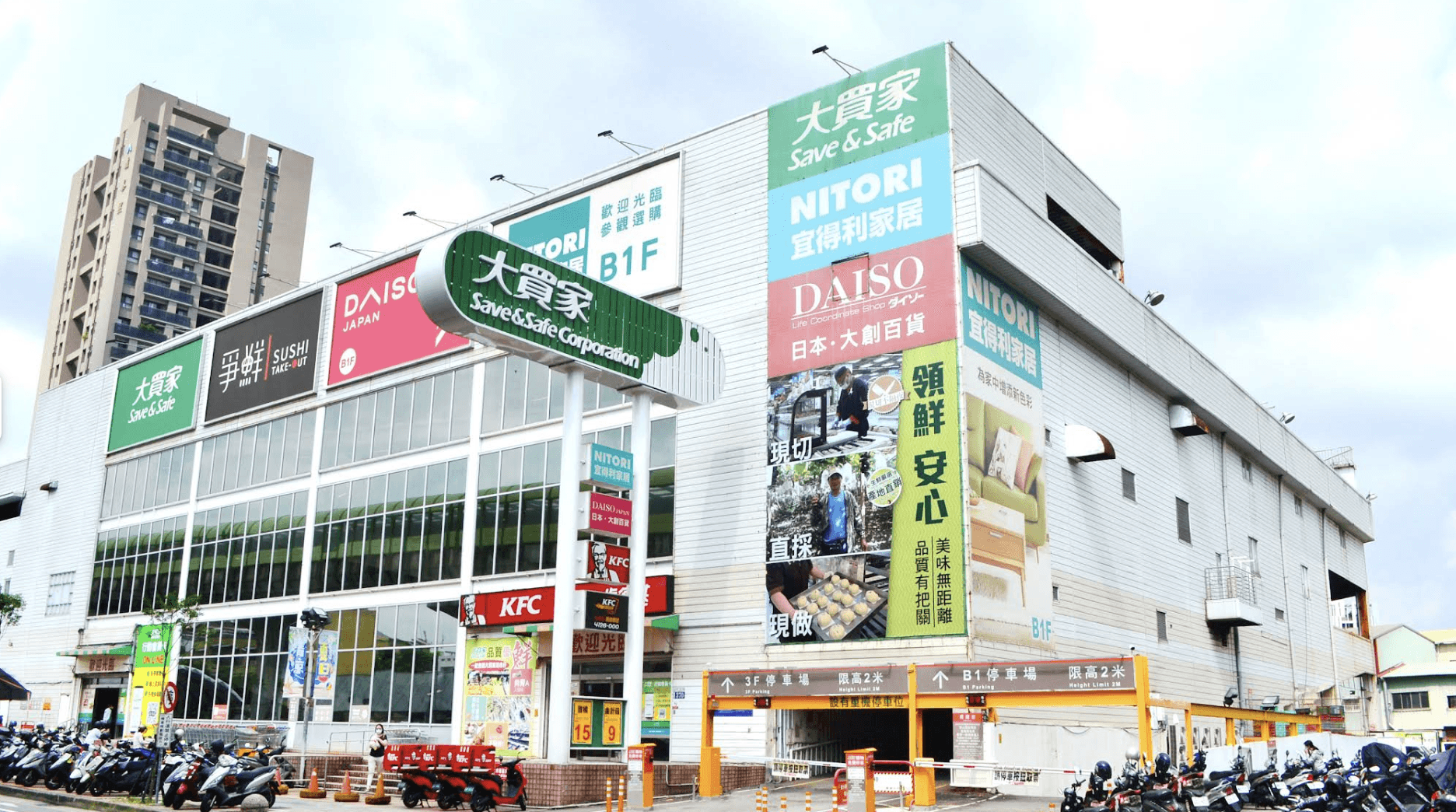
In the retail market scenario with high call volumes, a major buyer has introduced voice AI as the first line of call handling. Through clear categorization of questions and a designed human-machine division of labor, about 76% of in-store calls can be processed at the Voicebot stage, with approximately one-quarter of calls requiring judgment and follow-up coordination being handled by humans. This model effectively reduces on-site disruptions and allows humans to focus on high-value cases, demonstrating a long-term operational practice of human-machine collaboration in retail scenarios.
The phone has not disappeared; it has simply become the biggest distraction on-site
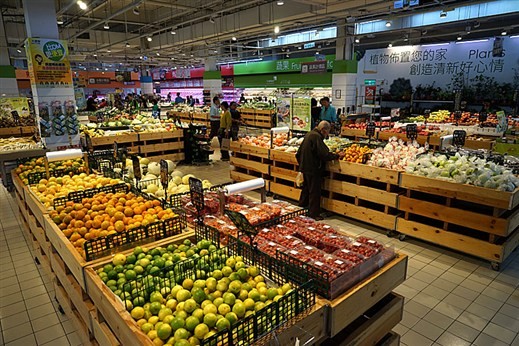
For large buyers, the phone has always been a part of operations. The real issue is not whether there is a customer service center, but that calls come directly into the store and to the front-line staff. The store has to handle checkouts, restocking, customer inquiries, and on-site services, yet the phone keeps ringing with inquiries about business hours, membership points, returns, group purchases, and various everyday questions. These questions are highly repetitive, yet they continually interrupt the staff serving customers on-site. In retail scenarios with high call volumes, if every call needs to be answered in real-time by a human, the efficiency on-site will be persistently eroded.
Relying solely on staffing will not truly solve the problem
Before implementing Voicebot, large buyers were well aware of the limitations of merely increasing manpower:
High training costs for humans and a low retention rate
Unable to provide stable support during non-business hours and sudden spikes
Store staff are not dedicated customer service personnel
High-frequency, repetitive questions occupy on-site time for a long time
Even with increased manpower, only a portion of the time can be temporarily sustained. The real issue that needs to be addressed is the structure of call allocation itself.
There was never an option for

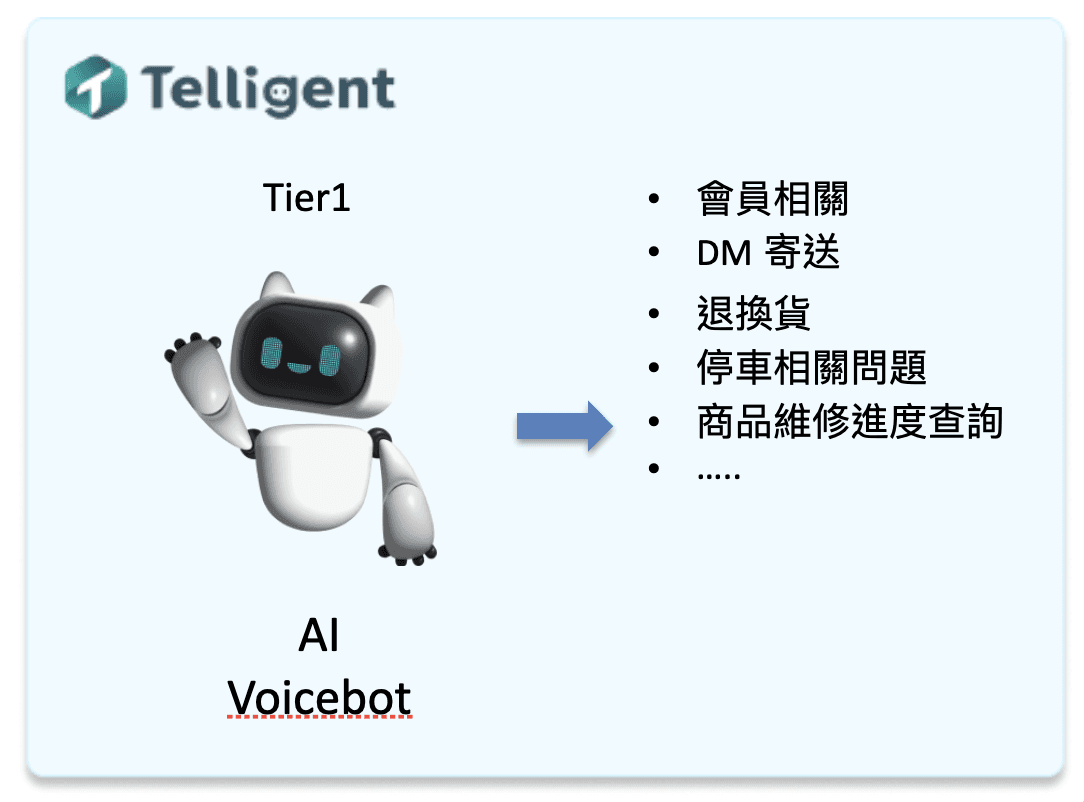
The calls handled by the Voicebot are high-frequency and can be standardized
In actual planning, large buyers do not hand over all calls to AI at once. They first organize existing call contents, defining high-frequency and standardizable issue types,
clearly as the responsibility of the Voicebot. These calls include:
Basic inquiries such as business hours and store information
Member-related issues (identity, points, applications)
Explanation of return and exchange processes as well as group purchases
Cancellation of DM delivery
Common announcements and service-related questions
Callers can directly describe their needs in natural language, with the Voicebot determining intent and completing the first-line response.
Which calls are deliberately not handed over to AI
At the same time, large buyers are also very clear about "which matters should not be handled by AI":
Specific blacklisted or special situation calls
Clearly requiring follow-up human contact for business (such as gift card purchases, bulk procurement, counter cooperation)
These calls are not let to be dealt with by AI, but instead go directly to voicemail or are followed up by a designated person. The key is not whether AI can handle it, but whether the brand does not want certain matters to be mishandled.
Real change happens in the "division of labor"
From the actual operating data at the end of 2025 to the beginning of 2026, approximately three-quarters of calls can be completed by the Voicebot in the first-line processing stage,
with the remaining approximately one-quarter of calls entering situations that require human intervention. Looking at the actual stores, the two main stores of the large buyer currently average about 50–60 calls per day each. After introducing the Voicebot, approximately 76% of calls can now be handled by AI in the first line,
which means that each store has about 40 calls per day that no longer need to be answered immediately by on-site personnel. This design of division of labor does not pursue extreme automation, but consciously retains humans to focus on handling cases that truly require judgment and subsequent coordination.

Which calls should not be handed over to AI
At the same time, major buyers are also very clear about "which matters should not be handled by AI":
Specific blacklisted or special situation calls
Business inquiries that clearly require follow-up by a human (e.g., gift voucher purchases, bulk procurement, counter collaborations)
These calls are not forced to be handled by AI but are directed to voicemail or followed up by dedicated personnel. The key is not whether AI can handle it, but that the brand does not wish for these matters to be mishandled.
Real change happens in the "division of labor"
From the actual operational data from the end of 2025 to the beginning of 2026, approximately three-quarters of calls can be completed in the Voicebot stage for the first-line handling,
while about one-quarter of calls require human intervention. In terms of actual stores, the two main stores currently operated by major buyers handle an average of about 50–60 calls per store per day. After implementing Voicebot, about 76% of calls have been processed by AI in the first line,
which means that each store no longer needs to have about 40 calls answered in real-time by on-site personnel every day. This division of labor design is not aimed at pursuing extreme automation, but rather intentionally retaining humans to focus on matters that truly require judgment and follow-up coordination.
The number of people has not decreased; they are now focused on more important tasks
Under this division of labor, the role of the human operator has also changed:
The average handling time of incoming calls has increased for those who remain
The number of "effective cases" that each person can handle has increased
This means that the calls transferred to humans are no longer simple inquiries, but rather more complex situations that require judgment and follow-up coordination. Humans have not been replaced by AI; they have been liberated from high-frequency disturbances.
What is felt first is not the system, but the site
After implementation, it is not the consumers who feel the difference first, but the operational site itself:
Frontline personnel are no longer constantly interrupted by phone calls
Managers can understand the structure of incoming calls through reports
Which issues are being addressed and which still need optimization are clear at a glance
The phone calls are no longer simply a matter of "can we handle all of them"; they have become a operational process that can be managed and optimized.
Stability comes from clear boundaries, not showboating
In high call volume retail scenarios, the success of voice AI is not about answering all calls, but whether it is clear about:
Which calls to hand over to AI
Which calls must be handled by a human
For major buyers, the value of this Voicebot lies in:
Clear and predictable division of labor
The ability to continue operating under varying promotion periods and call fluctuations
Humans and AI each staying in their most suitable roles
Choices for major buyers
This is not a fully automated switchboard system, nor is it about replacing human customer service with AI.
Rather, it is about redesigning the call division in high call volume retail environments, ensuring that every call is handled by the right person.