Taiwan Cement
Introducing a Chinese-English AI query tool in high credibility information scenarios.
7分鐘閱讀

For Taiwan Cement, public information has never been a problem. The real challenge is: when there is so much information that one has to browse through hundreds of pages of documents, can users still quickly find "the specific section they need"?This question most often arises for three types of people—investors, evaluation and research units, and internal colleagues responsible for external communications.
💡 Case Summary
Taiwan Cement has implemented a controlled generative AI query tool in high-trust information scenarios to assist investors, evaluation and research units, and internal colleagues in quickly locating publicly available information in both Chinese and English contexts. Through clear role divisions and governance boundaries, this system focuses on "query and guidance" rather than interpretation or speech, making correct information easier to find, verify, and accessible to more international users.
When information "exists," it does not necessarily mean it is "usable"
In practice, investors and researchers often need to confirm specific content in a public document: operating information for a certain year, an environmental disclosure, or a key paragraph in an announcement. In the past, this meant downloading files, repeatedly searching, and cross-referencing sources.
It is not that the information is opaque, but rather that the cost of obtaining and verifying it is too high. When Taimir evaluated this issue, a quick decision was made: AI should not be used to interpret or speak but should first address the issue of being "findable".
Usage Scenario 1: Investors need "location," not judgment
In the context of investor inquiries, the most important thing is not real-time analysis, but rather quickly locating official information.
Therefore, this tool is designed as a "quick access portal":
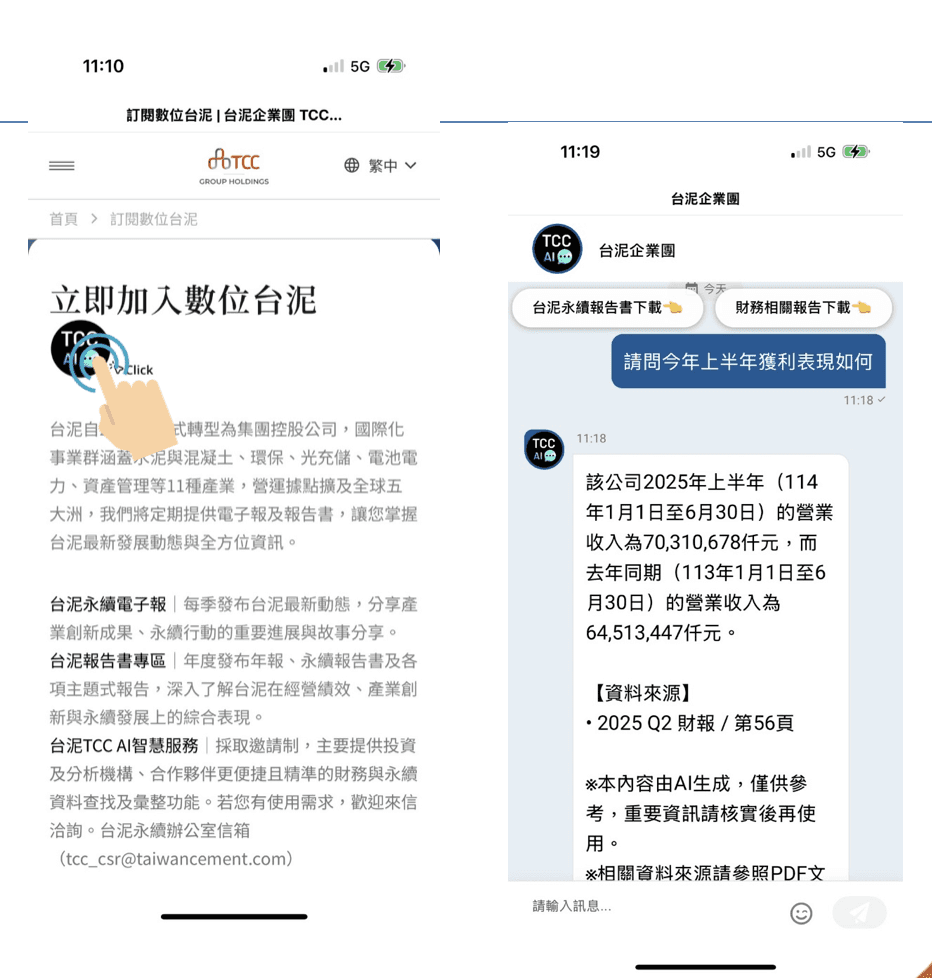
Users can directly describe their needs through questions
The system guides to the corresponding official documents
Ultimately, it returns to the original annual report or official data for confirmation
Taimir deliberately avoids letting AI play the role of "respondent," instead allowing it to become a guide to data access.
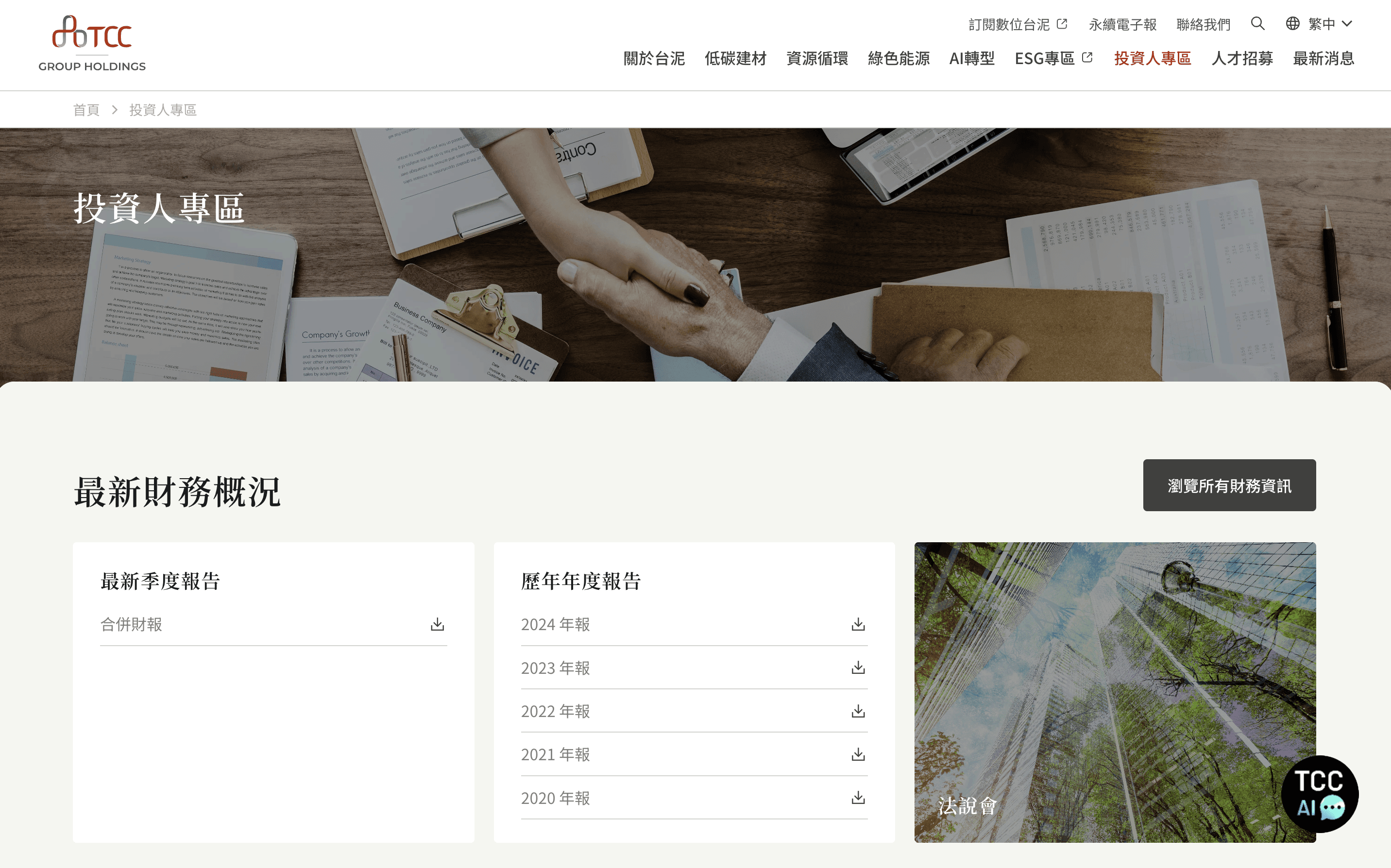
There are many historical report materials related to investors
Usage Scenario Two: Evaluation and Research Units need verification efficiency
For evaluation and research units, the challenge is not the ability to understand but the cost of time. Completing verification among a large number of public documents is inherently a high-friction task. With the help of query tools, they can quickly locate the correct sources, reducing the time spent searching back and forth through documents, and also making it easier to cite and compare data.
Usage Scenario Three: Overseas investors and research units face language barriers
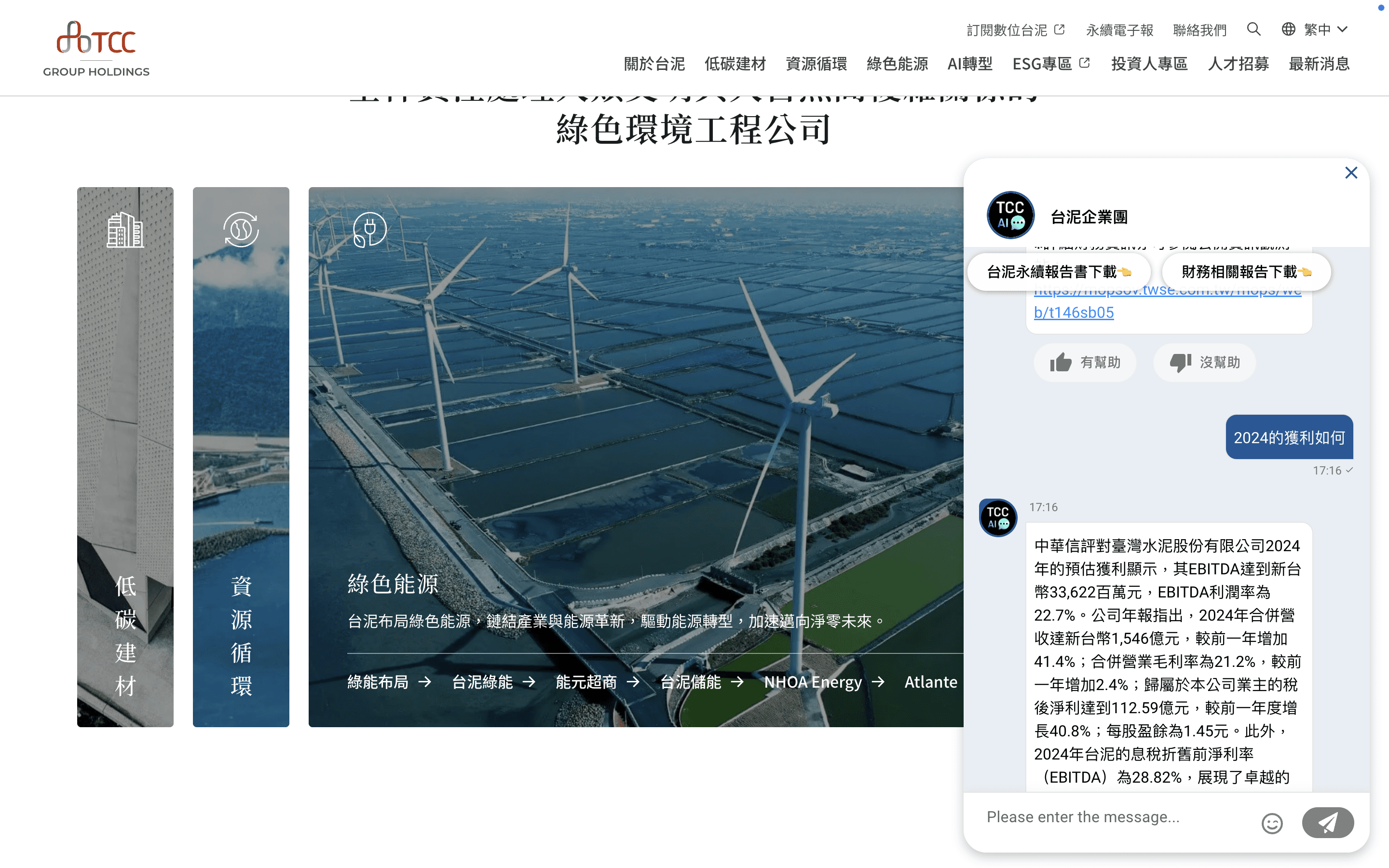
In actual usage scenarios, TPI also realized another key issue: If official information can only be queried in Chinese, it is equivalent to not existing for a large group of overseas users. Overseas investors, research institutions, and evaluation units often need to query information in English to include it in their research and reports. Therefore, the ability to query in both Chinese and English is not an added feature but a basic requirement. Only when official information can be quickly located by English users does it possess true international accessibility, allowing it to be seen and commented on by more people.
Scenario Four: Internal Colleagues Do Less Guiding and More Judging
In external communication, internal colleagues often need to assist in finding data, providing sources, and explaining document locations. These tasks are not complex but are highly repetitive. When external users can self-query and are guided to the correct information, internal colleagues can then focus their time on situations that require human judgment and responses.
Why This Scenario Cannot "Arbitrarily Use AI"
In these scenarios, TCC has set clear boundaries from the very beginning:
Responses must come from official data
Cannot cite information from unknown sources
Cannot create AI hallucinations
This is also why this tool does not engage in open dialogue, but rather operates within a limited scope of designated knowledge, focusing on queries and guidance.
People are still in the process, ensuring credibility
In this case, the human role is not an alternative, but part of the design:
Knowledge content must be created and modified after review
The addition and maintenance of knowledge are determined internally by Taiwan Cement
If correctness issues are found after going online, the content will be immediately adjusted
Such an arrangement allows the system to operate long-term rather than as a one-time project.
The results are not "AI is awesome," but rather that information is truly easier to use
For Taiwan Cement, the most stable and predictable value of such information-type AI projects is: improved query efficiency.
This is specifically reflected in three aspects:
Users can find the correct reference material quicker
The burden of internal explanations decreases
The process of obtaining information for evaluation and research units is smoother
Taiwan Cement's Choice
This is not an AI that can represent Taiwan Cement's voice or answers, but a tool that makes official information easier to find, verify, and correctly understand in different languages and usage scenarios.
This case only illustrates the application scenario of information inquiry and guidance, and does not involve any investment advice or external statements.