Insights
Exploring SaaS: Embracing New Business Trends of the 21st Century
5 mins read

What is SaaS: Definition and Application
SaaS (Software as a Service) software as a service, provides cloud software services over the internet. Users only need a browser, no traditional installation is required, and can access cloud applications anytime and anywhere with a pay-as-you-go model.
SaaS providers are responsible for developing and maintaining software, regular updates, and managing the operation of systems and data centers. Common use cases include:
Tools for personal use: Gmail, Dropbox, O365, Adobe
Process-oriented or functional software for enterprises: Salesforce, Workday, TECS, Twilio, Shopify
The Pioneer of SaaS: The Story of Salesforce and its Founder Marc Benioff
In the 1990s, the IT industry was dominated by large companies like IBM and Oracle, which long occupied the IT budgets of medium to large enterprises, fostering a "sales first" culture through top sales teams. Their business model relied on selling large software and closed hardware systems, charging high fees upfront, along with regular annual maintenance fees and new investments every 5-10 years. Marc Benioff was one of the winners in this game, being the youngest vice president at Oracle at the time; but he believed that focusing solely on sales results, without caring whether it actually helped customers achieve success, made it difficult to build long-lasting trust with them. As time went on, this model gradually drained Marc's passion for continued development.
Thus, he was determined to change the status quo, transitioning from "sales first" to "customer-centric," from "closing deals" to "listening and building trust." In 1999, he resigned from Oracle to start his own business, firmly believing that "software will eventually be replaced by services." That same year, Salesforce was born in a small apartment in San Francisco, waving the banner of "No Software," replacing cumbersome traditional software, hardware integration, and customized application models with flexible online services. Salesforce's subscription model allows customers to opt-out at any time. Most importantly, Salesforce established a "customer success department." They do not focus on KPIs related to sales performance but concentrate on listening to and deeply understanding how customers use their products and what truly matters to them, helping them achieve their goals. When customers churn, they engage in deep conversations to find out the reasons, using that information to continuously optimize their product. Over the past twenty years, Salesforce has maintained an annual compound growth rate of 51.2%, and in the last ten years, despite its scale, it has kept a growth rate of 29%, currently holding a 19.8% global market share in CRM.
Additionally, Salesforce focuses on building an ecosystem. As of 2023, this ecosystem has over 11,000 software developers and consulting firms, and more than 200,000 experts trained and certified, with these partners establishing close collaborative ways to solve customer problems together. According to IDC research, by 2028, Salesforce's ecosystem is expected to create 16 million new jobs and generate $2 trillion in revenue, with an influence comparable to the world's eighth largest economy. The ingenious idea behind the Salesforce ecosystem stems from Marc's lifelong mentor, Steve Jobs, whom he became acquainted with during his summer internship at Apple in 1984. In 2003, the fourth year of Salesforce's operation, despite yearly revenues exceeding $50 million, Marc still felt uncertain about the future and sought guidance from his mentor.
Steve Jobs told him three things: "First: If you want to be a great CEO, you must maintain mindfulness and foresee the future; second: Salesforce must grow tenfold in the next 24 months, and besides small and medium enterprise customers, Salesforce must land benchmark top-tier large customers; third: Salesforce must establish an application ecosystem."
Little Easter Egg
The "AppStore.com" and "App Store" trademark owned and used by Apple were originally owned by Salesforce (from 2004 to 2007). Due to user preference (at that time, the target audience for promoting the Salesforce APP concept was engineers), Marc decided to use the name "AppExchange" and launched the first commercial software marketplace in history. In 2008, when Steve Jobs announced "the App Store!" at the iPhone SDK launch event, Marc nearly fell out of his seat but felt honored, which led him to decide to grant the "App Store" to Steve Jobs's Apple for free as a return for the three pieces of advice from his mentor.
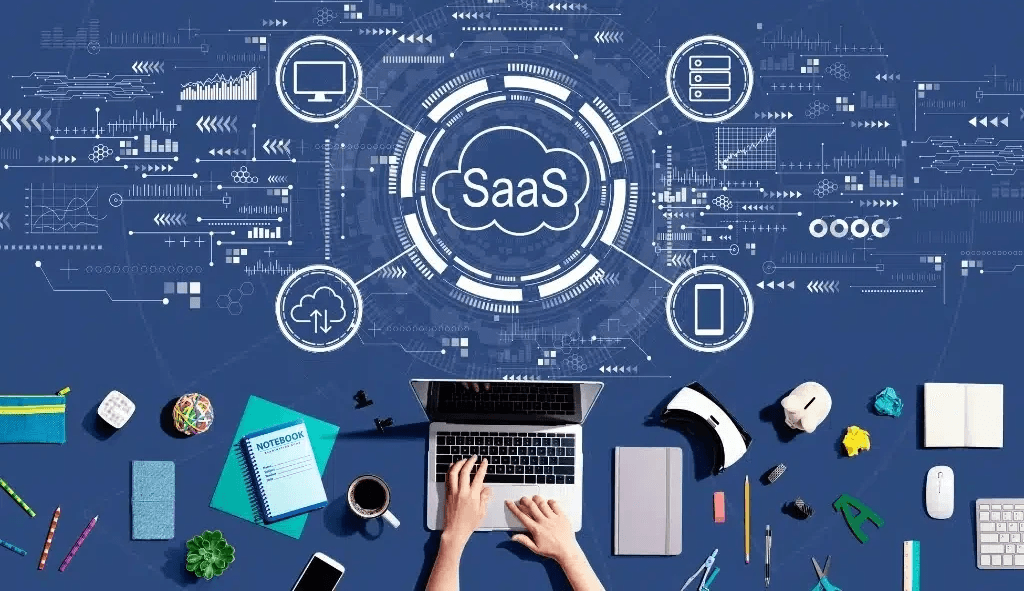
Characteristics of SaaS Derived from Salesforce's Success:
End-user subscription services
No installation needed, services accessible via browser
Quick deployment, scalability on demand
Regular updates, product optimization
Continuous evolution, iterative improvements
Customer-oriented, prioritizing customer success
Subscription model, lowering initial costs
No capital expenditure (CAPEX), only operational expenditure (OPEX)
Bringing customers and service providers closer, generating stronger stickiness
Building ecosystems through collaboration
The Impact of SaaS on Users and Service Providers:
For users, SaaS offers a more diverse range of service options, aiding in digital transformation. It provides low barriers to entry, on-demand adjustable equivalence of service, and access to enterprise-grade software services along with auto-scaling cloud computing resources, without the headache of building infrastructure themselves, thus tightening the digital gap and enabling data integration to enhance efficiency. Users can quickly assess services and change providers at any time, reducing risk. For service providers, SaaS stabilizes cash flow and aids in financial forecasting. It necessitates continuous understanding of customer needs, creating value and enhancing stickiness. SaaS brings service providers closer to customer demands, realizing the vision of a "common product". It allows service providers to focus their investments on seizing market opportunities. With technological advancements, service providers will have more powerful tools to build SaaS services and ecosystems. SaaS enables service providers to operate with a long-term perspective, persevering to eventually achieve great success.
So far, Salesforce has tirelessly promoted the SaaS model, becoming a leader in this field. In addition to Salesforce, numerous companies have followed the SaaS model and achieved outstanding results. Many SaaS companies, including human resource management software Workday, video conferencing software Zoom, and customer service platform Zendesk, have reached public listing and continue to grow rapidly. It is foreseeable that the SaaS business model will continue to change the way businesses operate and the business ecosystem in the foreseeable future.
In conclusion, SaaS injects new thinking and operational models into 21st-century business. It lowers the barriers to entry requiring substantial upfront investment, provides highly scalable services, bridges the connection between enterprises and customers, and creates a vast ecosystem. SaaS is bound to be an indispensable operational model for enterprises in the 21st century, and is worth actively exploring and applying by companies.
You might also like



Let's evaluate your customer service upgrade path.
Talk to us about your industry scenario, and we will provide you with the best AI × human collaboration suggestions.